Author Interview: Lea Wait

Over the years I have enjoyed all four of Lea Wait’s historical novels for young people. Last Friday I reviewed Finest Kind here on my blog. Today it is my privileged to introduce Lea for this interview.

What parts of Finest Kind are factual?
The background of FINEST KIND is accurate: because of the Panic of 1837, banks failed in Boston and other cities, there was widespread unemployment, and many families were in dire circumstances, as Jake’s family was. The acceptance (or, rather, lack of acceptance) of those born with physical or mental disabilities is accurate for that period. A little later in the nineteenth century there were institutions where families sent those with mental disabilities, but in 1837 such individuals were kept at home and hidden, or, as in Simon’s case, found a place within the community.

Wiscasset was, and is, a real town, and many of the people in FINEST KIND did live and work there. Dr. Theobold (who also appeared in my book WINTERING WELL) was the town doctor, and Thursey Seigars was his housekeeper. The minister, the shopkeepers, and other local people are real characters. Most notably, everyone who worked at (or who was incarcerated in) the Wiscasset Jail was a real person, including Samuel Holbrook, the jailer who also was a school master, and his wife Lucy and their children. The jail and jailer’s home did burn down December 3, 1838, and Lucy Holbrook, her children, and the inmates of the jail, were all saved by students who saw the flames on their way to school that morning.

The other characters in the book are fictional, although there were people like them in 1838 Wiscasset.

Out of all your historical books for young people, who is your favorite character? Why?
Who is my favorite fictional character? That’s an impossible question! It’s like asking me which of my children I like the best! I did love writing Granny McPherson, in FINEST KIND.

In general, I love my characters who are survivors; who find out their decisions can control their lives even in the worst circumstances.

They would include Abbie, in STOPPING TO HOME, who comes up with an ingenious solution to keeping what is left of her family together. Michael/Noah (he even changes his name to survive) in SEAWARD BORN, who gives up all he knows and loves for a chance at freedom. Will, in WINTERING WELL, who refuses to believe his life is over when he loses a leg in an accident. And Jake and Nabbie in FINEST KIND, both of whom are proud and stubborn and refuse to give up even when it seems impossible for them to take care of their families.

What is your favorite location in Wiscasset?
My favorite location in Wiscasset is, I’ll admit, that jail, which really is on Federal Street in Wiscasset.

The jail that is there now is the one built in 1839 to replace the one that burned in 1838. I first visited it when I was about ten years old and can still remember how cold and still those old cells were. How horrible it must have been to have been imprisoned there.

Now I sometimes give tours of the jail myself, and love pointing out the bars that one prisoner tried to saw through, and the drawings of a schooner another prisoner made on a whitewashed cell wall. The cells are dark and cold. Granite doesn’t burn, so the walls are the same ones Jake would have seen, and the worn stone floors are the same ones Sam Holbrooke and his wife Lucy walked on. I like feeling that through FINEST KIND many people who’ve never been able to visit a jail like this one in person have been able, through Jake, to find out a little about what it was like to live through hard times in the 1830s.

Is there anything else you would like to share with readers?
We have some of the same problems today that people had then. Families still have secrets. People are still born with disabilities. We still have bullies. People still make fun of other people they don’t understand. There are still parents who can’t find jobs and parents who drink too much.

Writing about problems doesn’t solve them. But sometimes it’s easier to see problems from a distance. That’s what I hope my books will do: open windows to the past, and show how real people, with real lives, and real problems, lived then. They survived their problems, and we will survive ours.

Someday, when my younger readers now are grown, maybe one of them will write an historical novel set in 2012, and one of their young readers will wonder how people ever coped in the old days.

It could happen.

Thank you so much for your thoughtful answers, Lea!

Book Review: Finest Kind

“We have to believe it’ll be all right, Jake,” said Mother, reaching out to touch his hand. “Cousin Ben has found us a place to live, and Father has a job. It will be different from Boston, but we’ll be fine.”

After his father looses his job, Jake and his family head north to Wiscasset, Maine. Their new life is hard. Mother is afraid their new neighbors will find out about Jake’s brother, Frankie. Father is rarely home. Their new house is small and dark. Jake has difficulty making friends. Worse of all, he feels responsible for the family and he knows they don’t have enough food for the coming winter. Will Wiscasset ever feel like home? Will Jake’s family ever be together again?

I picked this book a few weeks ago. I intended to read one chapter before going to sleep, but several hours later (at midnight) I finished the last page. Finest Kind brings history to life.

Author: Lea Wait
Audience: 9 and up
Genre: Historical Fiction
Pages: 246
Publisher: Margaret K. McElderry Books

Join me on Wednesday for an interview with author Lea Wait.

Read More Book Reviews

Author Interview: Anna Myers

Happy 4th of July! When I asked Anna Myers to do a interview on this day, I wasn’t thinking about it being Independence Day. It is really quite appropriate, though. Anna’s book, Spy!, which I reviewed last Friday is about Nathan Hale, a great patriot who gave his life for our country.

What made you decide to write Spy?
I happened to be discussing history with a young man named Nathan when I learned he had no knowledge of Nathan Hale. After the conversation, I did a little research and discovered how young he was when he died and that he had been a teacher. The story began to form in my mind almost immediately.

What gave you the inspiration for Jonah and his side of the story?
After I leaned that Hale was a teacher, a boy from his class just seemed natural. I listened to songs from that time period and that part of the country. Several of the songs were about whaling and the back story about Jonah’s father began to grow. Music always helps my imagination work.

What message would you like readers to take away from this book?
I always want my readers to realize that history is made by real people, and I want them to feel connected to the past. In this particular story, I also hoped that they would see the British side of the conflict also.

Is there anything else you would like to share with readers?
When I write a story, the characters become very real to me even the ones that are totally fiction. I once had my hand on a Christmas gift I intended to buy for a character in the book on which I was writing. It was a book about marble collecting, and the character had a marble collection. Nathan Hale was buried in New York. No one knows exactly where. Now when I walk the streets of that city, I often wonder if he is buried beneath my feet.

Thanks so much for the interview, Anna!

Read More Author Interviews

Book Review: Spy!

The young man looked down from the cart at the people in front of him. Jonah felt his teacher’s eyes meet his own, and for a fraction of a second a smile played on the prisoner’s lips. Then he glanced toward heaven and spoke. “I only regret that I have but one life to lose for my country.”

Twelve year old Jonah has an obligation to remain loyal to the King of England, but it’s hard to be a loyalist in 1774. The fact that his beloved school teacher is leaning toward the rebels doesn’t make matters easier for Jonah. For a time he determines to remain neutral, but eventually he will have to make up his mind. What impact will his decision make?

I highly recommend this book. I was crying my eyes out by page six and read the book as much with my heart as my eyes. If you read Spy!, you’ll finish it feeling like you were personally acquainted with Nathan Hale. As John Adams once said,

Posterity! you will never know how much it cost the present generation to preserve your freedom! I hope you will make a good use of it.

Author: Anna Myers
Audience: 9 and up
Genre: Historical Fiction
Pages: 211
Publisher: Walker Publishing Company

Join me on Wednesday for an interview with author Anna Myers.

Read More Book Reviews

Author Interview: Pat Hughes

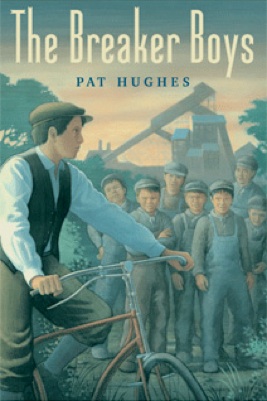
Last Friday I posted a review of Breaker Boys. There are two reasons I think I enjoyed Breaker Boys so much. Nate and Johnny (the main characters) are interesting and easy to root for. The second reason I liked it so much was it introduced me to a world I had never considered before–coal mining. The history of coal mining is amazingly interesting. Today Pat Hughes, the author of Breaker Boys, is here to answer a few questions. Thank you, Pat!

What gave you the idea for this story?
After I had been married to my husband, Sam, for a few years, I learned that his family had owned coal mines in the Hazleton, Pa., area back in the 1800s and early 1900s. It seemed to be something that the family was almost ashamed of in the present day, because of the stereotype that the coal operators had exploited the poor immigrants. As I began to research, I found that there was a lot more to it than that. The more I learned about the miners and the owners, the more I needed to write the story. It became important to me to tell all three sides – “yours, mine, and the truth,” as Mary tells Nate in the book.

What are some of the challenges you face being an author?
The biggest challenge for me as an author continues to be how to get my books into the public eye. I’m not a self-promoter; never have been. I love to sit alone in a room and write. I hate to go to conferences and shmooze, I hate to bang my own drum all over the Internet, I hate to call/email people and beg them to write about my books. Yet it’s the writers who consistently do those things whose books get noticed. I don’t aim to be a big commercial success a la JK Rowling or the authors of the “Twilight” and “Hunger Games” series. I would hate being famous! But I would like my books to be better known. And that is very hard to do.

What advice would you give to a person trying to become a fiction writer?
1) Read a lot and write a lot. That’s how you develop a style and it’s how you improve.
2) Only write a story because you have to, not because you merely want to, or think you should for some reason. When I write it’s never “I want to write a book about a boy whose family owns coal mines,” it’s “OMG, I have no choice but to write a book about a boy whose family owns coal mines.”
3) View self-publishing options as your last resort. I think too many people today just want to see themselves published any way they can without working hard enough to be really good. Your goal should be to get so good that somebody pays YOU for the stuff you write … not that you pay somebody else to publish you.

Is there anything else you would like to share with readers?
I love historical fiction so much, and I just wish more people, especially young people, shared this passion. It’s distressing to me that most young people only seem to want to read about wizards, fairies, elves, vampires, werewolves … and depressing dystopian future societies! But there are so many rich, colorful, fascinating stories in the past. That’s why it’s especially exciting to me when a young person like you contacts me about one of my books. It’s great to know there are some kids out there who keep their minds open to historical novels. So thank you for letting me know how much you like “The Breaker Boys,” and thanks for having me on your blog.

Thank you for joining me on my blog!

Read More Author Interviews!

Book Review: Breaker Boys

More laughter. No surprise. Among all the boys, Nate didn’t have a single friend.

Expelled from school, Nate Tanner has no friends to leave behind and doesn’t expect to find any friends when he arrives home in disgrace. Even his father seems to be against him. Then Nate meets Johnny. Johnny and his family work in the coal mine Nate’s family owns. An unlikely friendship springs up between the two boys, but Nate doesn’t dare reveal his true identity. When Johnny finally finds out, Nate fears their friendship is over for good. Can he do anything to make things right?

I read this book quite a while ago. It caught my imagination and still hasn’t let go. Reading Breaker Boys will introduce you to the fascinating but heart-rending world of coal mining 1890s. A lot of facts and historical events are mixed into this gripping story. The one downside is Nate’s penchant for lying, but he learns the consequences of his actions and owns up by the end of the book. definitely recommend Breaker Boys.

Author: Pat Hughes
Audience: 10 and up
Genre: Historical Fiction
Pages: 256
Publisher: Farrar, Straus and Giroux

Join me Wednesday for an interview with Pat Hughes!

Read More of My Book Reviews

Author Interview with Rick Barry

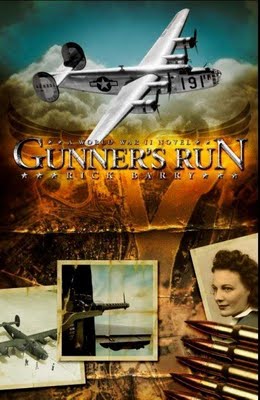
I am so excited that Rick Barry, author of Gunner’s Run, (click here for my book review of Gunner’s Run) is here to answer a few questions about Gunner’s Run and writing. If you haven’t already read Gunner’s Run, I encourage you to think about doing so. Enjoy the interview!


What was the most unexpected fact or story you uncovered while researching for “Gunner’s Run”?

Looking back, I believe the most unexpected fact I discovered in my research concerned traitors who aided the Nazis voluntarily, particularly in Belgium. I had been to Belgium before, but obviously not during World War II. So I had never realized how some Belgians quickly tried to get in good with the victorious Nazi invaders by helping them and spying for them and turning in citizens who secretly resisted the invasion. This is the fact that led me to create the character Henri, who at first befriends Jim Yoder, but later imprisons him in order to turn him over to the Nazi regime for a reward.


What message would you like readers to take away from “Gunner’s Run”?

I will word this answer carefully, because I don’t want to spoil the story for anyone who hasn’t read the book yet. However, you can say that Jim Yoder never viewed himself as a hero and at the beginning of the story really had no interest in God whatsoever. He thought he was in pretty good control of his life. But when reality strikes and he finds himself alone, away from all his friends, and on the run behind German lines, he realizes he really is not the captain of his own fate, that he could be shot and killed any moment. That’s when he begins recalling everything that he ever learned about God and begins to trust in Him instead of himself.

What advice would you give to a person trying to become a fiction writer?

This is a terrific question, but it’s also one that could fill up a whole book by itself. Today’s fiction writers face a lot of competition, so in order to rise above the mass of mediocre writing being done out there, I would give several starter tips:

1. Read–a lot! And I don’t mean short, frivolous stuff. Especially read books in the genre you want to write someday, and you’ll be filling your brain with good plots, good background information, good examples of grammar, etc. Even without taking a course in writing, people who read widely greatly expand their literary and historical horizons. At the same time, though, be discerning in what you read. Many novelists fill their stories with illicit relationships, vulgar language, and other unseemly details not fitting for the brain of a wholesome person. If you feed your brain unclean images and stories, you can pollute your thinking. I’m a Christian writer, and I don’t want to feed on literature that describes intricate details of things that God despises.

2. Pay attention to good English. Learn the right way to punctuate. Study how quality writers use punctuation marks. Master proper spelling. If you depend on your computer’s spell-checker to get the spelling and punctuation correct, then you are headed for trouble. Very often your computer will not understand what you’re trying to spell when you write plain or plane, affect or effect, insure or ensure, etc. Words and punctuation form the writer’s toolbox. Master the use of your tools just as a carpenter masters his tools, and just as the surgeon learns how to use his surgical instruments.

3. Develop a thick skin. Most writers will sooner or later ask someone else to read their manuscript and provide feedback. However, many, many of these people don’t really want honest feedback. Instead they want praise, and they will bristle when others point out errors or weaknesses. If you want to improve, take criticism in stride. If someone points out a problem, don’t get defensive or angry. Instead, objectively consider the statement and see how you can make your work better. Also, if someone praises your work, that’s nice, but it’s not helpful. Thank them for the compliment but still press them and say, “But how can I make it better?”

4. Subscribe to magazines specifically for writers. Good examples are The Writer, Writer’s Digest, and Christian Communicator.

5. You can learns tons of information about the publishing world today by reading the blogs of well-known Christian literary agents. I particularly recommend the blogs of the Steve Laube Literary Agency (http://stevelaube.com/blog/) and the blog of the Books & Such Agency (http://www.booksandsuch.biz/blog/). These agencies provide truly valuable information and professional insight on their blogs, and it’s free! (You can even comment or ask questions, and the agents will answer your questions, so these are terrific learning tools.)

Is there anything else you would like to share with readers?

Technology is changing, and the whole world is changing, but people still love a good story. The power of story is tremendous regardless of whether it comes as a book, or on a Nook, or on some other device. The author who can weave a good story can lead the brains of readers to places and times they’ve never personally experienced. If the story causes that reader to become a better person as a result of your words, then that is truly rewarding.

You can visit Mr. Barry at his own blog by clicking here.

Book Review: Gunner’s Run

“Pilot to gunners. Keep your eyes open. We’re almost to target. By now every German fighter in the area knows where to find us.”

I pressed the intercom button to respond to Lt. Conover. “Bring ’em on. We’re ready.”

Nineteen year old Jim Yoder has his life under control until he ends up a fugitive in Hitler’s third Reich. As he journeys across Europe Jim encounters other fugitives, traitors and resistance fighters. Will he make it home to tell his father and the girl he loves that he trusts God?

I have read this book three times. Once on my own, and twice out loud. I started reading it to my dad while we were on vacation, but we didn’t finish till we got home. Then I had to start it again because my mom and brother wanted to know what happened before the part they heard! Everyone enjoyed it, and I highly recommend Gunner’s Run.

Audience: 10 and up

Make sure you come back on Wednesday for an interview with Rick Barry, author of Gunner’s Run.