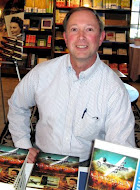
Author Interview: Anna Myers

Happy 4th of July! When I asked Anna Myers to do a interview on this day, I wasn’t thinking about it being Independence Day. It is really quite appropriate, though. Anna’s book, Spy!, which I reviewed last Friday is about Nathan Hale, a great patriot who gave his life for our country.

What made you decide to write Spy?
I happened to be discussing history with a young man named Nathan when I learned he had no knowledge of Nathan Hale. After the conversation, I did a little research and discovered how young he was when he died and that he had been a teacher. The story began to form in my mind almost immediately.

What gave you the inspiration for Jonah and his side of the story?
After I leaned that Hale was a teacher, a boy from his class just seemed natural. I listened to songs from that time period and that part of the country. Several of the songs were about whaling and the back story about Jonah’s father began to grow. Music always helps my imagination work.

What message would you like readers to take away from this book?
I always want my readers to realize that history is made by real people, and I want them to feel connected to the past. In this particular story, I also hoped that they would see the British side of the conflict also.

Is there anything else you would like to share with readers?
When I write a story, the characters become very real to me even the ones that are totally fiction. I once had my hand on a Christmas gift I intended to buy for a character in the book on which I was writing. It was a book about marble collecting, and the character had a marble collection. Nathan Hale was buried in New York. No one knows exactly where. Now when I walk the streets of that city, I often wonder if he is buried beneath my feet.

Thanks so much for the interview, Anna!

Read More Author Interviews

Author Interview: Pat Hughes

Last Friday I posted a review of Breaker Boys. There are two reasons I think I enjoyed Breaker Boys so much. Nate and Johnny (the main characters) are interesting and easy to root for. The second reason I liked it so much was it introduced me to a world I had never considered before–coal mining. The history of coal mining is amazingly interesting. Today Pat Hughes, the author of Breaker Boys, is here to answer a few questions. Thank you, Pat!

What gave you the idea for this story?
After I had been married to my husband, Sam, for a few years, I learned that his family had owned coal mines in the Hazleton, Pa., area back in the 1800s and early 1900s. It seemed to be something that the family was almost ashamed of in the present day, because of the stereotype that the coal operators had exploited the poor immigrants. As I began to research, I found that there was a lot more to it than that. The more I learned about the miners and the owners, the more I needed to write the story. It became important to me to tell all three sides – “yours, mine, and the truth,” as Mary tells Nate in the book.

What are some of the challenges you face being an author?
The biggest challenge for me as an author continues to be how to get my books into the public eye. I’m not a self-promoter; never have been. I love to sit alone in a room and write. I hate to go to conferences and shmooze, I hate to bang my own drum all over the Internet, I hate to call/email people and beg them to write about my books. Yet it’s the writers who consistently do those things whose books get noticed. I don’t aim to be a big commercial success a la JK Rowling or the authors of the “Twilight” and “Hunger Games” series. I would hate being famous! But I would like my books to be better known. And that is very hard to do.

What advice would you give to a person trying to become a fiction writer?
1) Read a lot and write a lot. That’s how you develop a style and it’s how you improve.
2) Only write a story because you have to, not because you merely want to, or think you should for some reason. When I write it’s never “I want to write a book about a boy whose family owns coal mines,” it’s “OMG, I have no choice but to write a book about a boy whose family owns coal mines.”
3) View self-publishing options as your last resort. I think too many people today just want to see themselves published any way they can without working hard enough to be really good. Your goal should be to get so good that somebody pays YOU for the stuff you write … not that you pay somebody else to publish you.

Is there anything else you would like to share with readers?
I love historical fiction so much, and I just wish more people, especially young people, shared this passion. It’s distressing to me that most young people only seem to want to read about wizards, fairies, elves, vampires, werewolves … and depressing dystopian future societies! But there are so many rich, colorful, fascinating stories in the past. That’s why it’s especially exciting to me when a young person like you contacts me about one of my books. It’s great to know there are some kids out there who keep their minds open to historical novels. So thank you for letting me know how much you like “The Breaker Boys,” and thanks for having me on your blog.

Thank you for joining me on my blog!

Read More Author Interviews!

Author Interview: Rachel Coker

Please join me in welcoming Rachel Coker, author of Interrupted.

1. What is one of the most challenging and/or the most rewarding aspect of being a teen author?
I think the most challenging part of being a teen writer is balancing writing with all of my other responsibilities. I’m still in high school! It can be very difficult sometimes to meet deadlines, do interviews, and arrange speaking events when I’m worried about science and Spanish homework. 🙂 One of the blessings of being a homeschooler, though, is that I can arrange my schoolwork around everything else. It all works out in the end, but it can be a struggle sometimes!

The most rewarding part of my experience as a teen writer has definitely been all the wonderful people I have gotten to know, in person and through emails and letters. It is such an encouragement to me to receive notes from teens all over the world who have been inspired by my story. I’ve kept every email and letter that I’ve received, and I read through them whenever I feel discouraged. They always bring a smile to my face! 🙂

2. Who is the person (besides God!) that influences you most in your
writing. Why?

I think I’m heavily influenced by the people that I know will read my writing. I try very hard to write books that are meaningful and touching, and will help young people to think about difficult topics, like death, faith, and love. But I always keep in mind that there may be children or non-Christians reading my works. So I’m very conscious to keep everything clean and Christ-centered. I never want to write something that my nine-year-old sister wouldn’t be allowed to read!

3. Tell us a little bit about your next project.
My next book is due to come out in March 2013! I haven’t announced the title yet (I will soon on my blog, though!), but I really hope that it will be as widely received as “Interrupted.” No, it’s not a sequel, but it is a historical YA novel set in 1969. It tells the story of Scarlett Blaine, growing up in Georgia with her big, dysfunctional family. Her younger brother, Cliff, is mildly autistic, but since autism wasn’t diagnosed in the 60’s, he is thought of as a freak and an outcast of society. Scarlett has to struggle with the normal pressures of growing up and discovering who she is, along with protecting her younger brother and keeping her family together. Despite all the outside influences that threaten to keep her family apart, she has to figure out for herself what is really important in life.

(Me: This sounds just as good, if not better than, Interrupted! Can’t wait to read it.)

4. Do you have a favorite scene in Interrupted?
I always loved the scene where Allie professes her love to Sam! I don’t want to spoil the scene for anyone who hasn’t read it yet, but a thrown shoe is involved, and it just tickled me to write that part. I hate writing overly sentimental, gushy scenes, so it was refreshing to make the one “love scene” of the book a little humorous.

5. Is there anything else you would like to share with readers?
I would love to send out a big “thank you!” to everyone who has read or bought my book “Interrupted”! It means so much to me that you would give my book a chance. I really hope you enjoyed it! To anyone who is interested, I would love it if you followed my blog (www.rachelcoker.wordpress.com) or “liked” me on Facebook!

Thanks for joining us, Rachel!

Author Interview with Rick Barry

I am so excited that Rick Barry, author of Gunner’s Run, (click here for my book review of Gunner’s Run) is here to answer a few questions about Gunner’s Run and writing. If you haven’t already read Gunner’s Run, I encourage you to think about doing so. Enjoy the interview!


What was the most unexpected fact or story you uncovered while researching for “Gunner’s Run”?

Looking back, I believe the most unexpected fact I discovered in my research concerned traitors who aided the Nazis voluntarily, particularly in Belgium. I had been to Belgium before, but obviously not during World War II. So I had never realized how some Belgians quickly tried to get in good with the victorious Nazi invaders by helping them and spying for them and turning in citizens who secretly resisted the invasion. This is the fact that led me to create the character Henri, who at first befriends Jim Yoder, but later imprisons him in order to turn him over to the Nazi regime for a reward.


What message would you like readers to take away from “Gunner’s Run”?

I will word this answer carefully, because I don’t want to spoil the story for anyone who hasn’t read the book yet. However, you can say that Jim Yoder never viewed himself as a hero and at the beginning of the story really had no interest in God whatsoever. He thought he was in pretty good control of his life. But when reality strikes and he finds himself alone, away from all his friends, and on the run behind German lines, he realizes he really is not the captain of his own fate, that he could be shot and killed any moment. That’s when he begins recalling everything that he ever learned about God and begins to trust in Him instead of himself.

What advice would you give to a person trying to become a fiction writer?

This is a terrific question, but it’s also one that could fill up a whole book by itself. Today’s fiction writers face a lot of competition, so in order to rise above the mass of mediocre writing being done out there, I would give several starter tips:

1. Read–a lot! And I don’t mean short, frivolous stuff. Especially read books in the genre you want to write someday, and you’ll be filling your brain with good plots, good background information, good examples of grammar, etc. Even without taking a course in writing, people who read widely greatly expand their literary and historical horizons. At the same time, though, be discerning in what you read. Many novelists fill their stories with illicit relationships, vulgar language, and other unseemly details not fitting for the brain of a wholesome person. If you feed your brain unclean images and stories, you can pollute your thinking. I’m a Christian writer, and I don’t want to feed on literature that describes intricate details of things that God despises.

2. Pay attention to good English. Learn the right way to punctuate. Study how quality writers use punctuation marks. Master proper spelling. If you depend on your computer’s spell-checker to get the spelling and punctuation correct, then you are headed for trouble. Very often your computer will not understand what you’re trying to spell when you write plain or plane, affect or effect, insure or ensure, etc. Words and punctuation form the writer’s toolbox. Master the use of your tools just as a carpenter masters his tools, and just as the surgeon learns how to use his surgical instruments.

3. Develop a thick skin. Most writers will sooner or later ask someone else to read their manuscript and provide feedback. However, many, many of these people don’t really want honest feedback. Instead they want praise, and they will bristle when others point out errors or weaknesses. If you want to improve, take criticism in stride. If someone points out a problem, don’t get defensive or angry. Instead, objectively consider the statement and see how you can make your work better. Also, if someone praises your work, that’s nice, but it’s not helpful. Thank them for the compliment but still press them and say, “But how can I make it better?”

4. Subscribe to magazines specifically for writers. Good examples are The Writer, Writer’s Digest, and Christian Communicator.

5. You can learns tons of information about the publishing world today by reading the blogs of well-known Christian literary agents. I particularly recommend the blogs of the Steve Laube Literary Agency (http://stevelaube.com/blog/) and the blog of the Books & Such Agency (http://www.booksandsuch.biz/blog/). These agencies provide truly valuable information and professional insight on their blogs, and it’s free! (You can even comment or ask questions, and the agents will answer your questions, so these are terrific learning tools.)

Is there anything else you would like to share with readers?

Technology is changing, and the whole world is changing, but people still love a good story. The power of story is tremendous regardless of whether it comes as a book, or on a Nook, or on some other device. The author who can weave a good story can lead the brains of readers to places and times they’ve never personally experienced. If the story causes that reader to become a better person as a result of your words, then that is truly rewarding.

You can visit Mr. Barry at his own blog by clicking here.